LOG · titanium board · 1 Sep → 30 Sep 2026 · Brisbane test kitchen
Thirty days with a titanium board. The plastic one went in the bin on day one.
We used one brushed titanium chopping board for every weeknight prep job for a month, and kept a diary. Not a lab report, not a sales pitch: dated entries, what we noticed, what annoyed us, and what we would tell a friend.
Sponsored content. Entries are written by the BerkotFood test-kitchen desk from one month of everyday use; your kitchen, knives and habits will differ. Links to specialist retailers may earn us a commission.
Why we started
Our old plastic board had become a map of every meal since 2021: deep grooves across the middle, a pinkish stain that no scrub would lift, and a faint onion smell that came back when it got wet. Knife-scored plastic is hard to clean properly, because food and moisture settle into the cuts, and it is not pleasant to think about what ends up on your food when the surface keeps wearing away.
The question for this month was simple. Could a non-porous metal board replace it for daily prep without making the kitchen louder, the knives blunter and the cooking slower? We used the same board, a mid-size brushed titanium model, for everything from capsicum to raw chicken.
How a titanium board is different
Most boards fail in the same way: the knife cuts into the surface, the surface opens up, and the opening holds whatever you cut next. Timber copes because the grain closes up a little and the wood dries out between uses. Plastic does not close up; the grooves just get deeper, and fine particles wear off along with them.
A titanium board works on a different principle. Metal resists the blade far better than plastic or timber, so instead of grooves you get, at most, faint hairline marks. Titanium is also non-porous and does not rust, so juices, colour and smell have nowhere to soak in. The trade-off is that the board does not give under the blade the way timber does, which is why the knife notes below matter.
Our ground rules for the month: one board for all everyday prep, hand washing only, the same two knives throughout, and a note in the diary whenever something surprised us, good or bad.
-
Day 1
Out of the carton
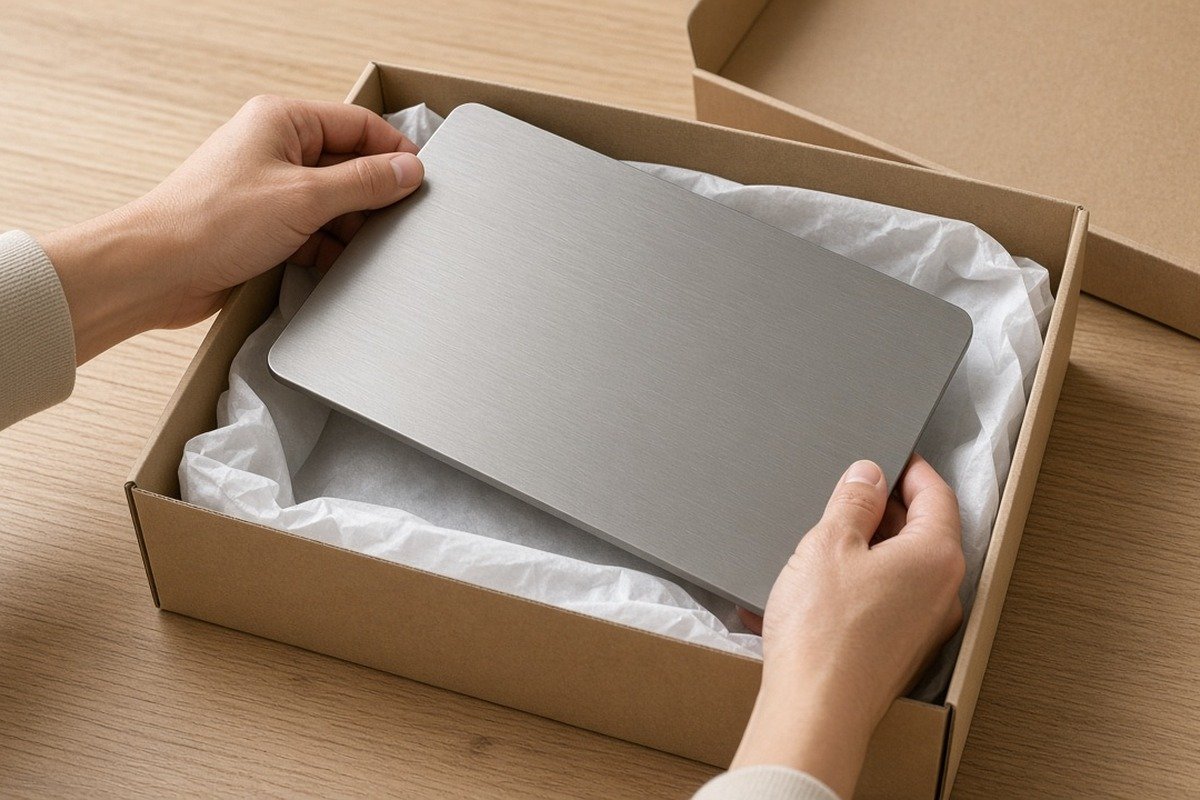
Plain kraft box, tissue, the board itself. It is lighter than it looks, roughly the weight of a medium bamboo board, and thin enough to slide into the gap beside the toaster where nothing else fits. First impression on the hand: cool, smooth, slightly grippy brushed finish rather than a mirror shine.
We washed it with warm soapy water before first use, dried it, and made a stir-fry. The first knife stroke is the moment everyone mentions. It sounds different. There is a light metallic tick on each chop that wood never makes.
-
Day 4
Weeknight speed, and the knife question
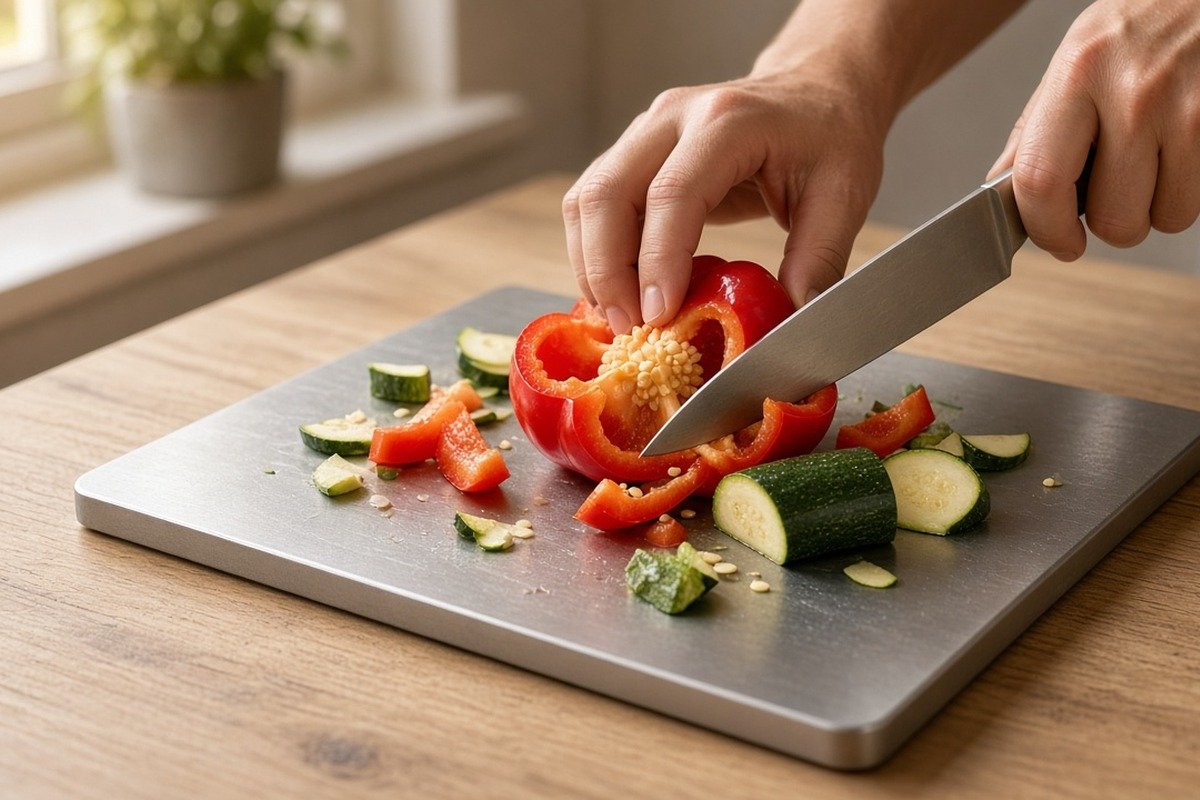
Four dinners in, the noise has stopped registering. Slicing capsicum and zucchini is quick, nothing soaks in, and beetroot did not leave a mark, which our plastic board could never claim.
Now the honest bit. Titanium is a hard surface, harder than wood or plastic, and your knife edge meets it with every cut. We noticed our everyday chef’s knife wanted a few strokes on the honing steel by the end of the week rather than once a fortnight. Rocking cuts felt a little skatey at first; straight push cuts suited it better.
Nothing soaks in. That sounds small until you prep beetroot, then chicken, then a salad on the same Tuesday.
-
Day 12
Raw chicken, then fruit: the rinse test
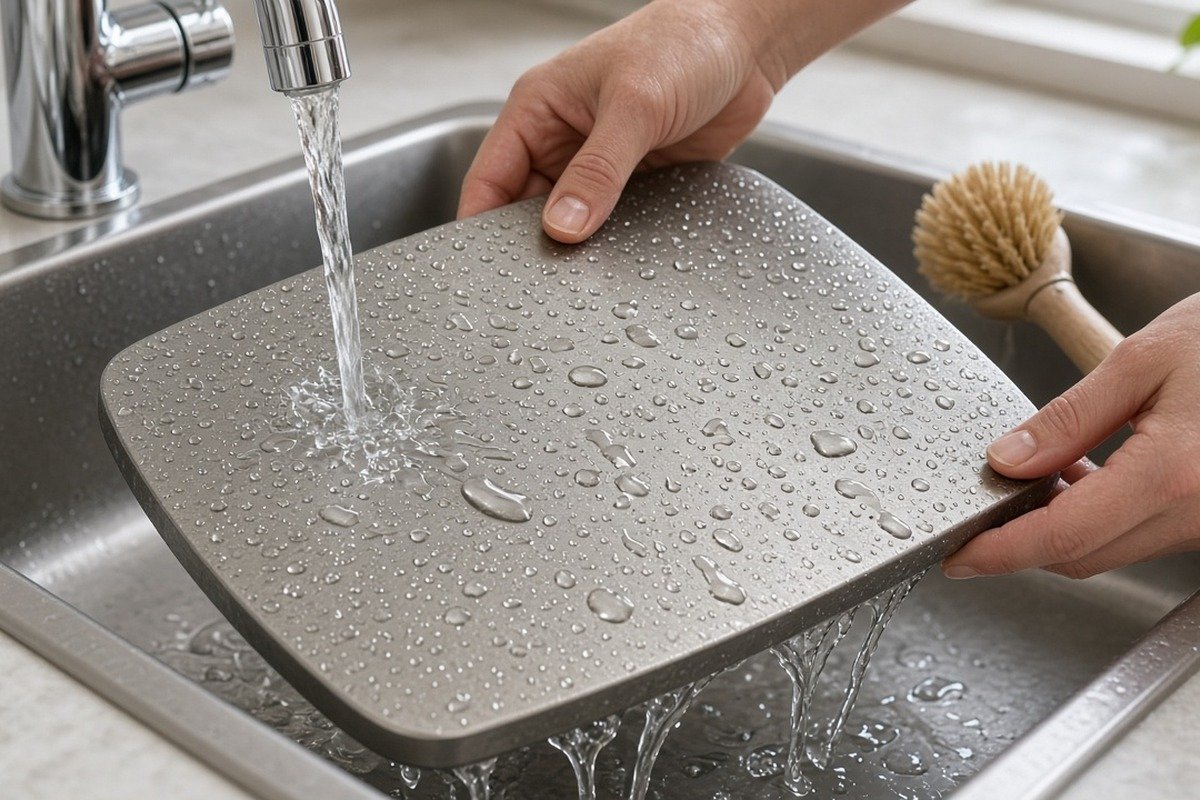
This is the entry where the board earned its spot. We trimmed raw chicken thighs, washed the board with hot soapy water and a brush, and then cut fruit for the kids’ lunchboxes. Because the surface does not hold knife grooves the way plastic does, washing feels like washing a plate rather than scrubbing into cracks. Water beads and runs off; it dries upright in a couple of minutes.
Standard food safety still applies to every board, metal included: wash thoroughly between raw meat and ready-to-eat food. What changes is how easy that is to do properly.
Smells were the other surprise. Garlic and fish did not hang around after washing. With the old board, a squeeze of lemon was the routine. Here it was not needed.
-
Day 30
Month end: what it looks like now
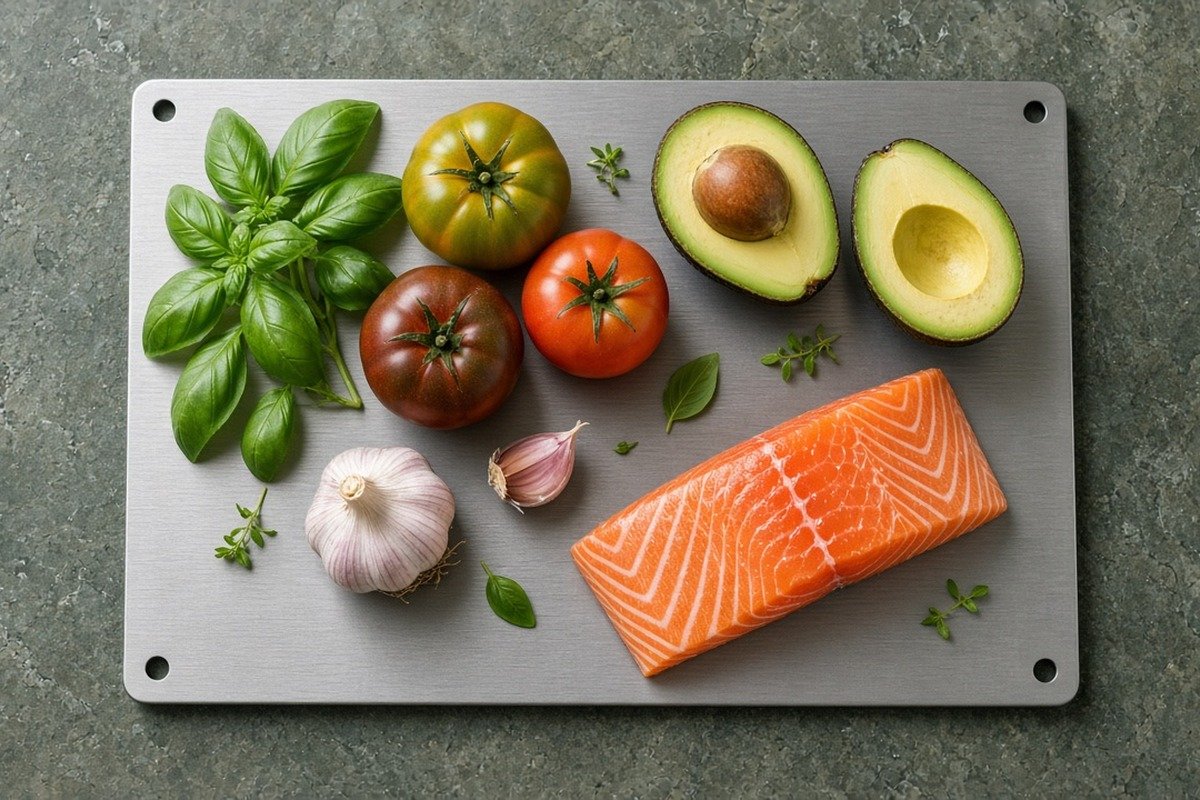
Thirty days of daily prep, and the surface shows faint hairline marks under strong light, the kind you see on a stainless sink, but nothing you could call a groove. No staining, no lingering smell, no warping from hot water. The plastic board is gone and we have not missed it.
The routine had settled by week three: board out of the drawer, prep, quick wash, upright in the rack. The rinse takes less time than drying a timber board, and nothing needed oiling or sanding.
We did keep one wooden board. Crusty bread and big roasts are still nicer on timber, and a heavy cleaver belongs on end-grain, not metal. The titanium board became the everyday prep surface: vegetables, fruit, raw meat and fish, cheese, herbs.
Side by side after a month
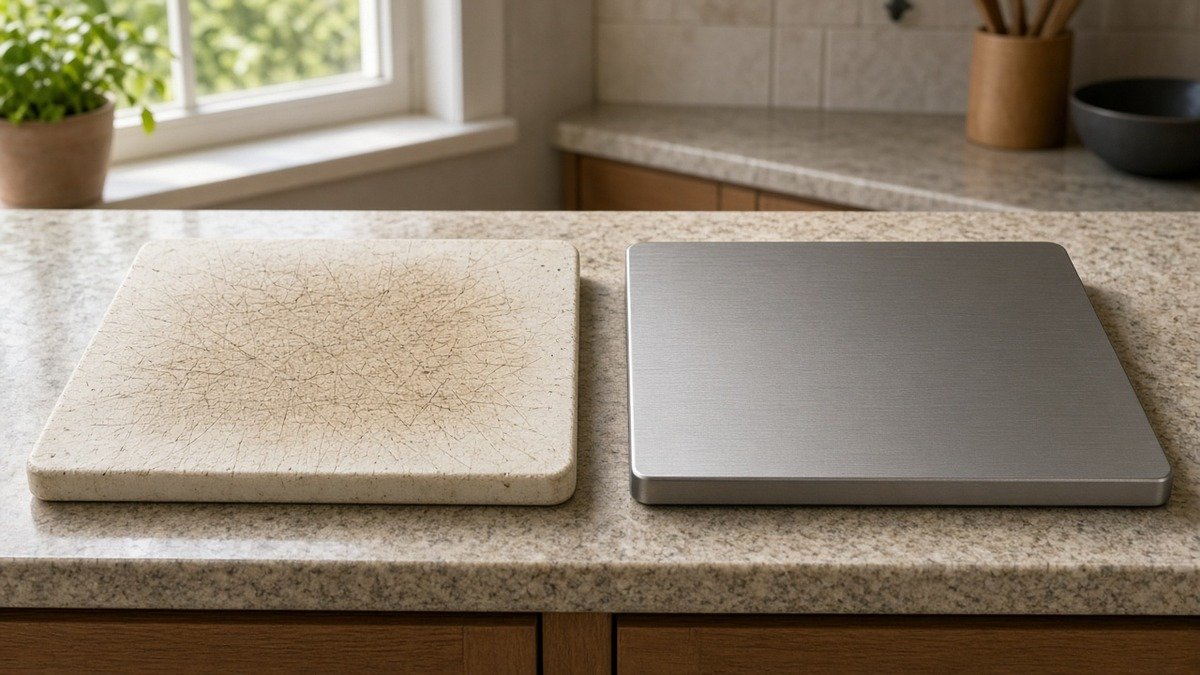
| After 30 days | Scored plastic | Timber | Titanium |
|---|---|---|---|
| Surface | Deep grooves | Light cut marks | Faint hairlines |
| Stains and smells | Held both | Some | None noticed |
| Cleaning | Scrubbing into cuts | Hand wash, oil now and then | Rinse, soap, brush |
| Knife edge | Gentle | Gentlest | Hone more often |
| Noise | Quiet | Quiet | Light metallic tick |
VERDICT · day 30
Would we buy it again? Yes, as the everyday prep board.
Kept us using it
- Nothing soaks in: beetroot, garlic, fish
- Quick, easy wash between raw meat and fruit
- Thin and light, stores anywhere
- Looks the same as day one
Worth knowing
- Knives need honing more often
- Audible tick on each chop
- Put a damp cloth underneath on stone
- Keep timber for bread and cleaver work
If you are tired of a grooved plastic board, a titanium board is a practical swap for daily prep. Choose a size that fits your sink so it is easy to wash, and keep a honing steel within reach.
Sponsored links to specialist retailers. We may earn a commission at no extra cost to you. Purchases happen on the retailer’s site.
Questions from readers
- Will it ruin my knives?
- It will not ruin them, but it is harder on the edge than timber. Hone regularly and sharpen when the knife starts to slip on tomato skin.
- Is it dishwasher safe?
- Check the maker’s care guide. We hand-washed throughout, which took under a minute.
- Does it slide around on the bench?
- On smooth stone it can. A damp tea towel or a thin silicone mat underneath solved it for us on day one.
- What size should I get?
- Measure your sink first. A board that fits flat in the sink is far easier to wash properly than one you have to balance on the edge.
- Can I cut raw meat on it?
- Yes. Wash it thoroughly with hot soapy water before using it for anything else, as you would with any board.