Sponsored guide
Plastic boards, microplastics talk, and the titanium alternative
A BerkotFood kitchen-lab guide for Australian cooks comparing prep surfaces — with disclosed links to titanium board specialists.
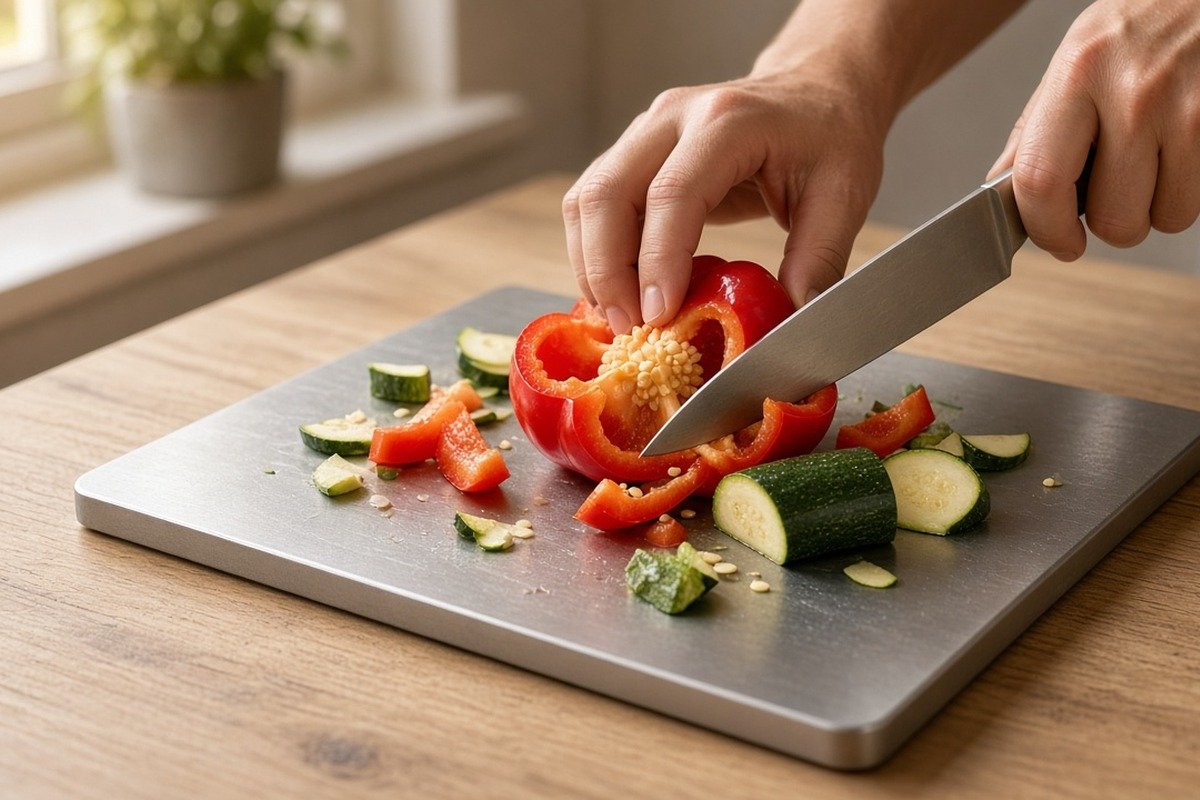
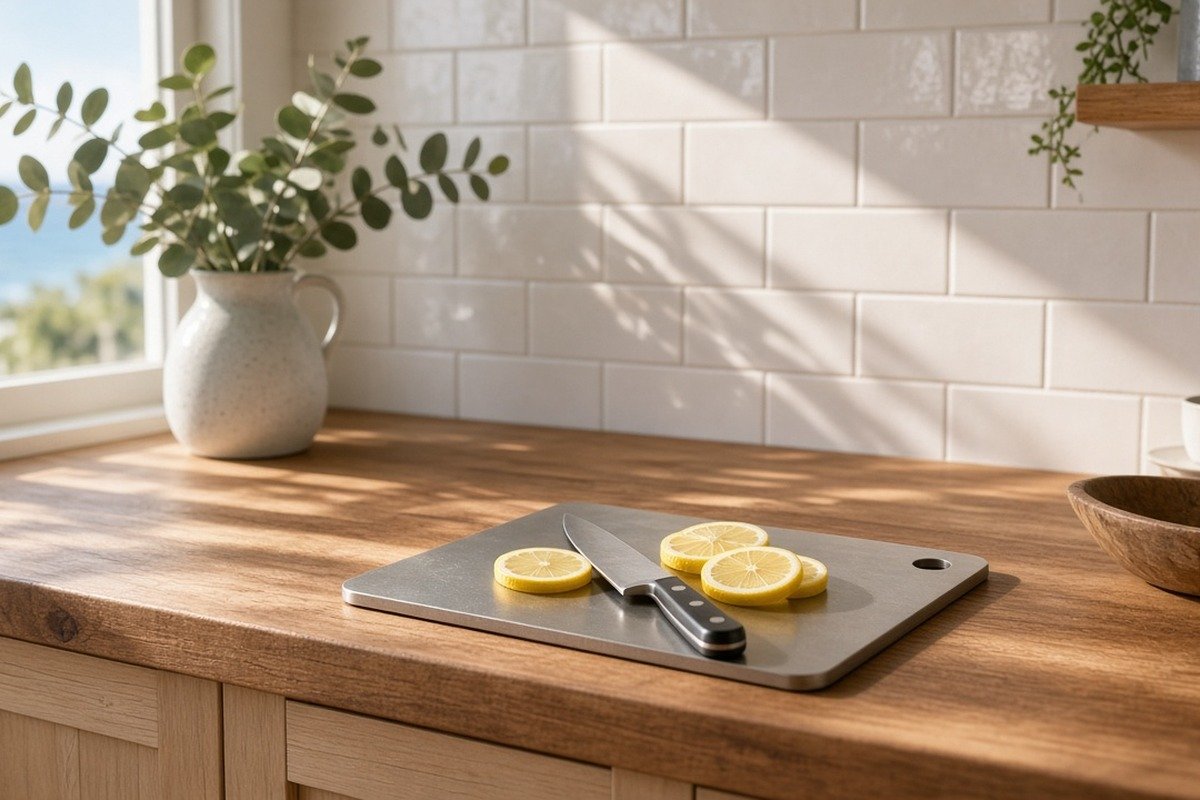
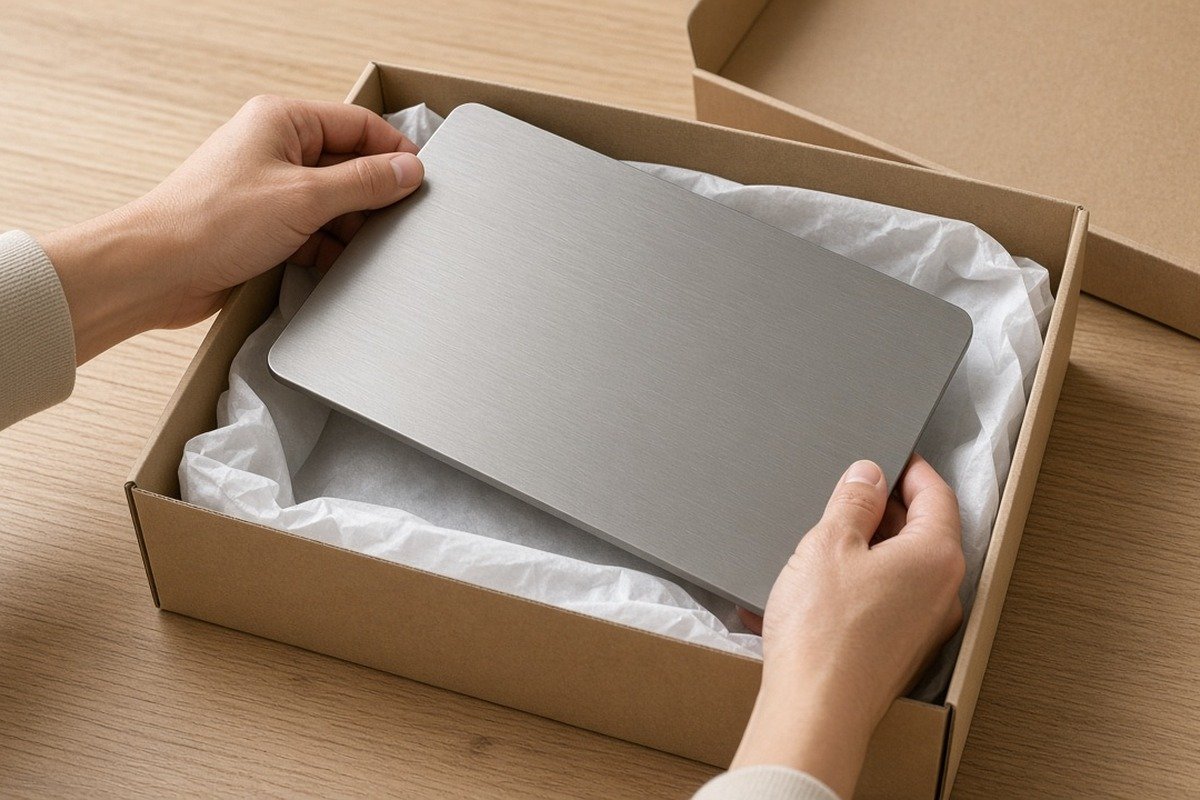
Plastic chopping boards are familiar, cheap, and easy to replace. They are also part of a wider conversation about knife wear, deep grooves that hold residue, and — in some consumer reporting — microplastic shedding when heavily scored. Titanium (and titanium-coated) boards market themselves as a non-plastic prep plane: denser, cooler to the touch, often with a juice groove and a brushed industrial face.
Check KatuChef titanium board tidy-lane AU
Titanium vs plastic, side by side
Same kitchen light, two materials. The comparison frame below is 16:9 so both boards stay whole — scratched plastic on the left, brushed titanium on the right.
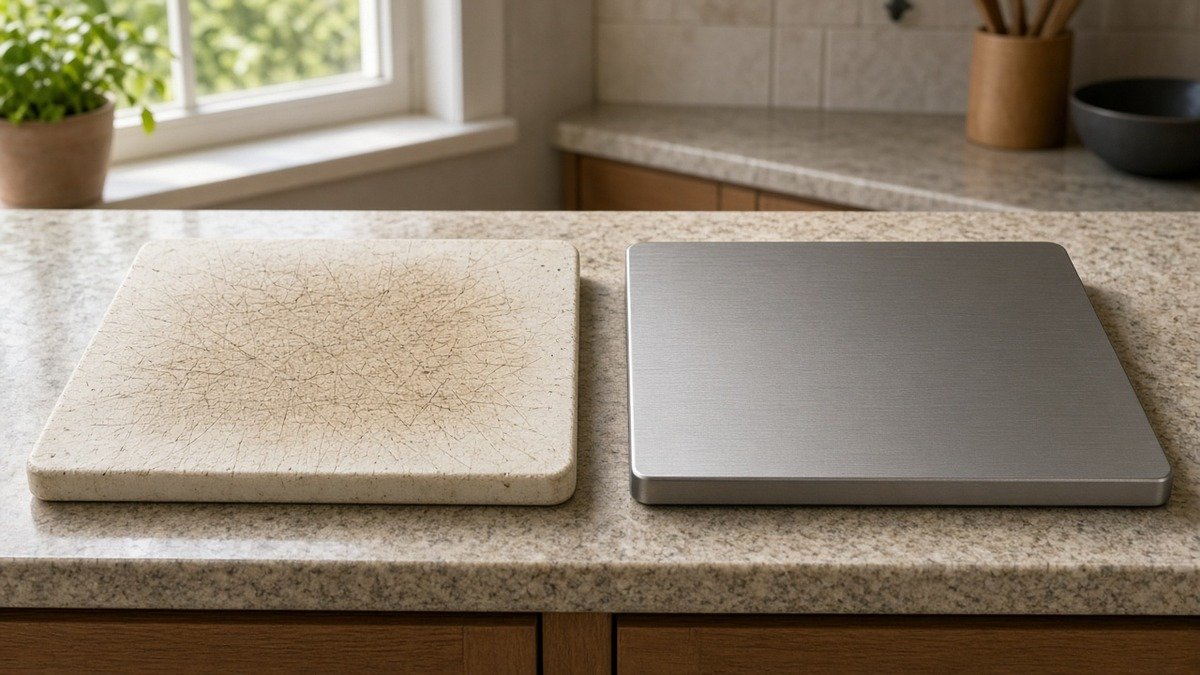
Cool graphite on warm marble — a kitchen lab, not a farmhouse story.
What changes on the bench
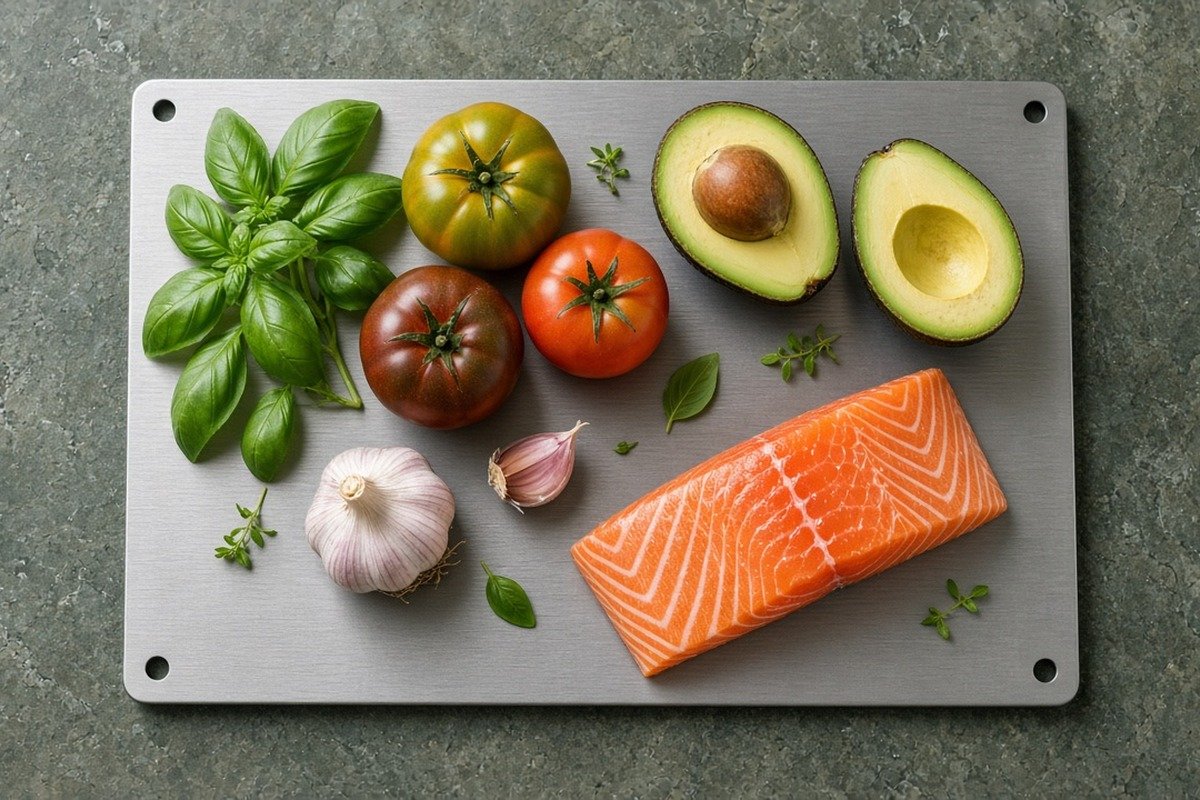
Expect a colder, more “lab” presence than wood or colourful plastic. Knives behave differently on metal planes — many cooks keep a wood board for bread and soft produce. Titanium brands emphasise durability and rinse-clean workflows rather than romantic butcher-block storytelling.
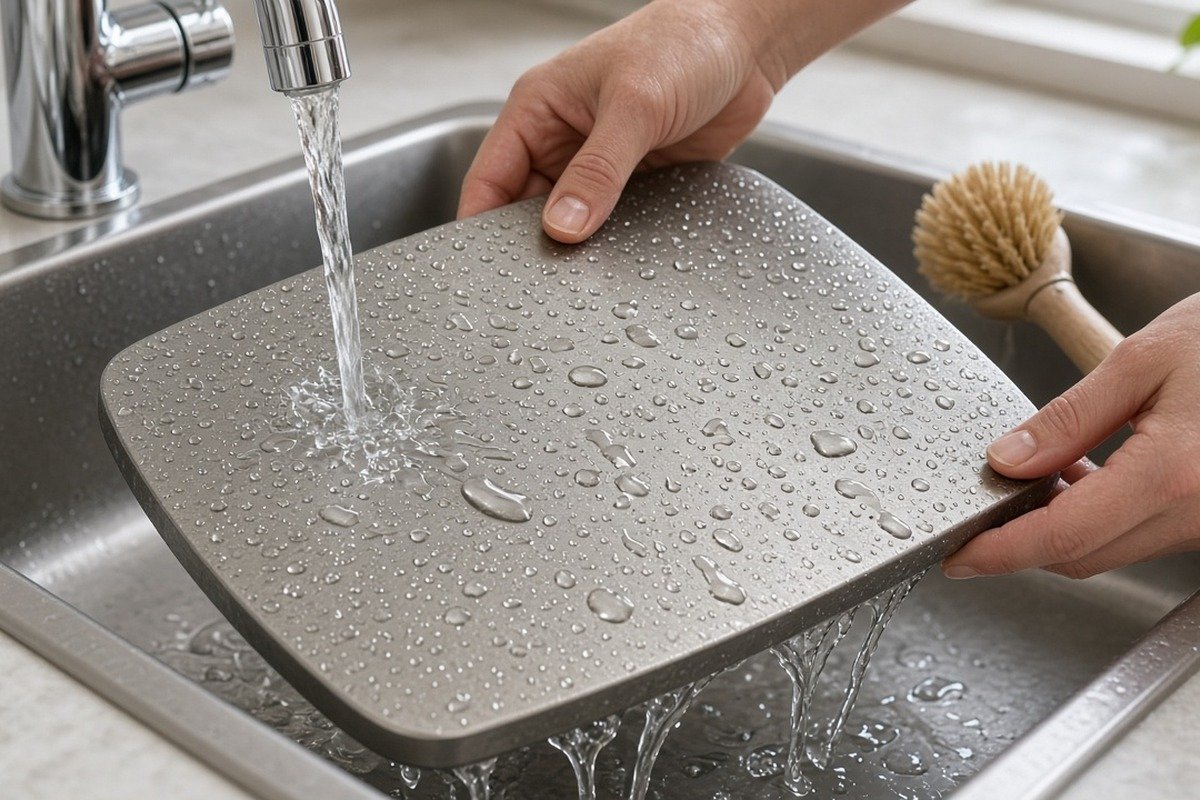
Rinse under the tap. Dry. Skip the soak-and-scrub mythology that plastic boards invite when grooves go deep.
Where to get a titanium board
Sponsored links to the specialist brand pages (purchases happen on their sites):